

The Surveillance State
It's a Panopticon!

“Panopticon” is one of those interesting words from history—the idea of a perfectly transparent prison where inmates could be watched and monitored 24/7/365. The concept is more than 200 years old, and I suppose it’s taken that long for it to reach its full maturity with the surveillance state, the subject of Rebecca Gordon’s article for TomDispatch yesterday.
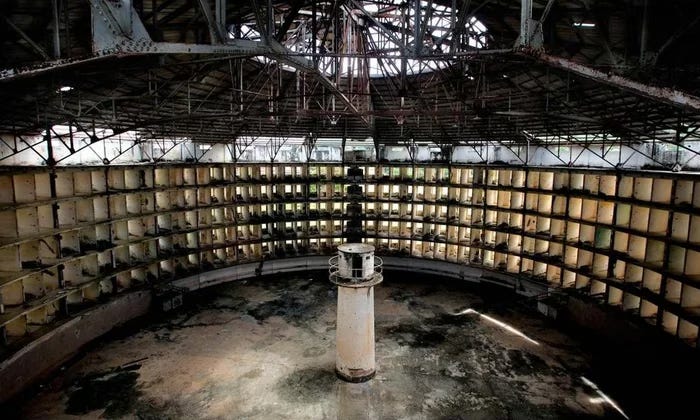
One thing is certain: privacy is certainly a thing of the past. To the question of who owns your data, the answer often is: Not you.
Why is this? For many reasons, of course, not the least being that knowledge is power and that powerful entities want more power, so they want more of your information. There’s another potent reason, and it’s from the Good Book: vanity. All is vanity, as the Bible says; the human desire to be looked upon with favor is potent indeed.
Social media, of course, taps this hard. The ultimate trick was and is sites like Facebook and Instagram, where people constantly update where they are, what they're doing, their latest hairstyle and look, etc.
The amount of information we surrender, more or less voluntarily, is staggering. The government, working with Mark Zuckerberg and his ilk, has tapped the power of vanity--our yearning to be recognized by somebody somewhere, maybe lots of somebodies everywhere. And then add convenience (with Smart phones) to vanity, along with the idea of safety, and you have a virtually irreversible surveillance society that's allegedly "good for us."
We gaze constantly at our screens even as we update them with our latest vanities—including lots of data about us. The screens become distorted mirrors in which we and others gaze at selected images of ourselves; they become lenses too that magnify certain aspects of our lives; they can, of course, also be hacked or coopted to become one-way mirrors for others, or listening devices, most certainly tracking devices.
We acquiesce to this for convenience; we shrug our shoulders that losing some privacy is nothing compared to the benefits of Smart phones and social media and the buzz we get from being in the loop, “putting ourselves out there” for all the world to see.
And so we have the United States of Surveillance, where everyone can fancy themselves a celebrity with thousands of friends and fans, though we may not relish the fame of those chased and harassed by paparazzi—let alone government agents.
I’ve read articles where people talk about going back to flip phones, of abandoning social media, and so on, and I’m sure some people succeed in doing this. Yet the genie is out of the bottle; we rubbed it too hard, in our vanity, seeking gifts and wishes that have come back to haunt us.
It’s hard for democracy to flourish in an atmosphere of little privacy (hence Orwell’s concept of “Big Brother” who’s always watching); it’s also hard for democracy to flourish in an atmosphere of persistent and perpetual war. The combination of “We’re at war!” and constant surveillance makes it difficult to imagine a revival of participatory government that serves and addresses the needs of ordinary people. War and surveillance: it’s no accident Orwell made them central features of “1984.”
What is to be done? Don’t ask me. I’m opening my own cell in the panopticon, putting myself out there by writing confessional articles on Substack.
Maybe Timothy Leary was right when he said: Turn on, tune in, drop out. Dropping out of sight while kindling your inner light: that’s a real trick. But is inner enlightenment a worthy goal if you can’t boast about it on Facebook or post photos of your glowing aura on Instagram?
Addendum: Cheers to all my readers! I’ve lost a few paying subscribers recently, which is no big deal. If any of you freeloaders (ha!) wish to sign up and pay for my keen insights and dazzling brilliance (Trump isn’t the only “very stable genius”), now might be a good time. If nothing else, you’ll feed my vanity that my writing is worthy. A yearly subscription is less than seventeen cents a day—what a bargain!
The moment I saw your illustration I thought to myself: "a lighthouse of the damned." No escaping this light of surveillance and monitoring. Aye, the genie is out of the bottle and has fled with the stopper.
We made Amazon what it is -we fed the surveillance- the data collecting monopoly...we as serfs-as consumers rather than citizens. Consumerism- instant gratification. Efficiency is our God and the likes of Amazon Meta Telsa X... delivered. We cared for that consumerism material growth over using that space we lost to monopolies. Ralph Nader told us for over 50 years we were losing our freedoms because we were too busy as consumers and not active as citizens. We did not care-we wanted more consumer goods in the social disease of more...never having enough. Be it social media or substackers...it's all-instant takes-consumerism behind our screens. Depth and understanding are lacking. We have no time for careful slow inclusive takes or for civics beyond being arm-chair critics. If you want an example of depth Bill read Iain McGilchrist's The Master and His Emissary or his The Matter With Things: Our Brains, Our Delusions and the Unmaking of the World. Bill I am not a freeloader but do you not have enough? Do you need this substack to sustain you financially. Are you free of the disease of more? Would you publish less often and go deeper if you did not feel compelled to publish daily?