


Who Determines U.S. Foreign Policy?
The Golden Rule Applies

Who determines U.S. foreign policy? The question seems simple enough. According to my go-to source, the AI chatbot ChatGPT,
U.S. foreign policy is made by the President, with the assistance and advice of the National Security Council and the State Department, and with the approval of Congress. The President has the power to negotiate treaties and executive agreements, and to appoint ambassadors, while Congress has the power to approve or reject treaties and executive agreements, and to confirm ambassadors. The National Security Council and the State Department are responsible for providing the President with advice and information on foreign policy issues.
That’s how many people see it. Except it doesn’t work that way. More than anything, America is an oligarchy rooted in capitalism and driven by greed and profit. Foreign policy, therefore, is most often driven by powerful corporate interests, especially those tied to the military, hence President Eisenhower’s military-industrial complex. When looking at foreign policy, one must always factor in the interests of Wall Street and its small army of lobbyists and especially powerful corporate interests in fossil fuels and similar trillion-dollar industries.
Again, when looking at U.S. foreign policy, its decisions and commitments, one should first ask, Cui bono? Who benefits the most from the decisions made? Second, one should keep in mind the golden rule, as in they who have the gold make the rules. Presidents, Secretaries of State, ambassadors, and the like come and go, but the moneyed interests remain. And with “dark money” now endemic in politics, it’s difficult to parse exactly who is giving what to whom.
I don’t mean this as a great revelation. In the 1950s C. Wright Mills wrote of the “power elite,” which I cited in an article on greed-war. This is what Mills had to say:
the high military, the corporation executives, the political directorate have tended to come together to form the power elite of America … a triangle of power [that is] the key to any understanding of the higher circles in America today.
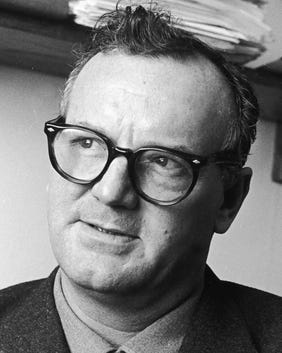
That power elite largely drives and determines U.S. foreign policy today. Recall as well that the Pentagon budget today (almost $860 billion) is 14 times greater than the State Department (roughly $60 billion). Basically, State is a tiny branch of the Pentagon. I wonder who calls the shots?
We’d like to think we the people have some say over foreign policy. Don’t we elect our members of Congress? Don’t we elect our president? But when both parties are thoroughly corporatized, when both respond to lobbyists and special interests while ignoring the rest of us, the truth is we essentially have no choice and no influence.
That truth can be hard to believe because we like to think we have some agency. But we have none. Even so, the power elite will pretend that our opinions matter, even as they resolutely ignore them. Consider the most important foreign policy decision any nation can make: whether war is to be declared and our troops are to be sent off to fight and die. We haven’t made that decision as a nation since December of 1941. Every war America has fought since World War II has been undeclared. That should tell us something about who’s in control. Hint: It’s not us.
The rich and powerful will tell you and sell you what “truth” to believe in. So, we’re told and sold the idea that Joe Biden is making vitally important decisions in the White House, even as Joe nowadays has trouble reading from a teleprompter. We’re told and sold the idea that Congress represents our interests when it most definitely doesn’t (as the Princeton Study proved). We’re told and sold the idea that America cares about fostering democracy in places like Afghanistan, Iraq, and Ukraine, but a bit of digging reveals the real forces and interests at play, such as oil, pipelines, strategic metals, market dominance, and the like.
Look, I’ve taken standard college courses on U.S. foreign policy. I learned a lot from them. But even in college I didn’t learn much about the colossal power of America’s military-industrial complex; the enormous influence of mega-corporations; the way in which foreign policy is shaped by economic profit and the pursuit of resources, some of which is captured in that old saw that “What’s good for General Motors is good for America.”
Well, GM may have waned in influence, but other industries and financial interests have taken its place. Again, if America’s foreign policy decisions confuse you, clarity should come when you ask yourself, who benefits (not you, of course), and when you remember the golden rule, as in they who have the gold make the rules.
I talk to John Rachel here about U.S. foreign policy. Less than 30 minutes.
https://www.youtube.com/watch?v=FvOun9YOqwk
"I don’t mean this as a great revelation."
Even absent learned studies and erudite commentary, I think common sense proves the accuracy of your take about foreign policy, Bill. At least, for those who make an effort to stay informed.
But I'd posit that it was ever thus. The money-determines-policy concept dates back to historical nation-states. The Spanish expeditions to the New World certainly weren't altruistic in nature, for example. Then there was the East India Company and all the colonialism (backed by military power, of course) that resulted therefrom. Russia's centuries-long mantra of moving westward and gaining warm-water ports was also a money-making vehicle, as much as anything else (although some of the czars also wanted to European-ize their country) I'd assert that powerful merchants/moneyed interests were at least partly responsible for most of those historical trends. We know, for example, that some of the big Dutch banks were highly influential in pushing foreign policy. Then there was the U.S.-based United Fruit Company's (founded in 1899) adventures in Latin America, also backed by military power, as Smedley Butler discussed. Myriad other examples exist, of course.
All this to say that the golden rule has always been a mainstay in any foreign policy among more [and often less] powerful countries. I won't even start on the Vatican.
Perhaps we just see it more clearly in 20th and 21st century U.S., because the power is so naked and so concentrated. And even we peasants can now access some information about our government's doings, which our 15th-century predecessors largely could not. I'd also speculate that this country’s unabashed worship of the military has made it easier for the profit motive to come out of the closet.